


If you have ever dealt with a damaged sewer line or a stubborn slab leak, you already know the sinking feeling that comes with it. Water bills spike, floors feel damp, and suddenly you are staring down a repair that could tear up your yard, your driveway, or even the concrete slab under your home. At LeakChasers, we field this exact worry from Oklahoma homeowners every week, and it almost always leads to the same question: should we go with trenching or trenchless repair?
There is no one-size-fits-all answer, but there is a right answer for your specific situation. In this guide, our team breaks down trenching vs trenchless sewer repair in plain language, walks through the real pros and cons of each, and explains how we help homeowners across the Oklahoma City metro decide which path makes the most sense for their home, their budget, and their timeline. Whether you are searching for OKC slab leak repair right now or just trying to get ahead of a problem before it becomes an emergency, this article is for you.
Understanding the Basics: What Trenching and Trenchless Repair Actually Mean
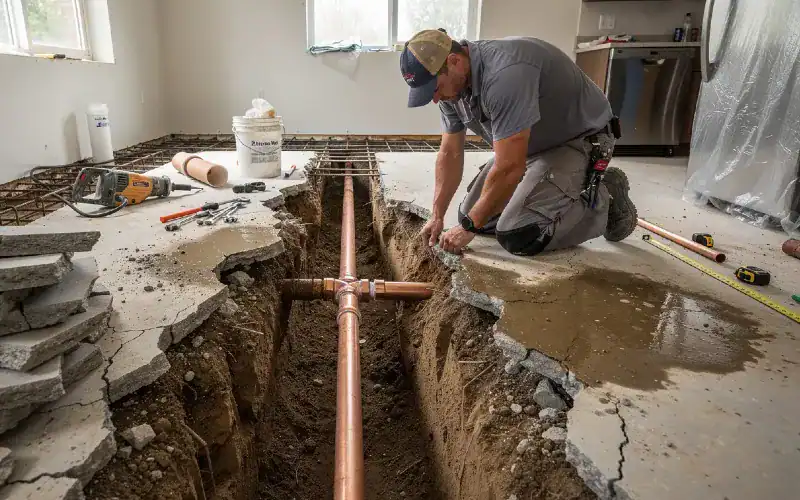
Before comparing trenching vs trenchless, it helps to understand what each method actually involves.
Traditional sewer repair methods, often called open trench sewer repair, involve digging up the ground above a damaged sewer line to expose the existing pipe. Once the pipe is exposed, our trained technicians can remove damaged pipes, replace pipes, or install brand new pipe sections. This is the method that has been used for decades, and in certain situations it is still the most practical choice.
Trenchless sewer repair, on the other hand, uses modern technology to repair or replace a sewer line without digging a continuous trench across your property. Instead, trenchless methods rely on small access points, usually just one or two entry pits, to reach the damaged sewer line. From there, specialized equipment and trenchless tools do the heavy lifting underground. Two of the most common trenchless techniques are pipe lining (also called cured-in-place pipe, or CIPP) and pipe bursting.
With pipe lining, a resin-coated liner is inserted into the existing line and inflated. Once the resin cures, it forms a flexible liner that hardens into a smooth, jointless new pipe inside the original pipe. With pipe bursting, a bursting head is pulled through the old pipe, simultaneously pulling a new pipe into place while it breaks apart the old one. Both trenchless pipe repair methods allow our team to restore a sewer system without the extensive digging that traditional excavation methods require.
The Pros of Trenching (Traditional Sewer Repair)
Traditional sewer line repair still has a place in the plumbing world, and it is not always the wrong choice. Here is where open trench sewer repair tends to shine.
It works well for shallow, straightforward jobs. When a sewer line is close to the surface and easy to access, trenching can be more cost-effective for straightforward and shallow utility work. There is less need for specialized equipment, and the job can sometimes move faster if the property is undeveloped or the excavation path is simple.
It allows for full visual inspection. Because the pipe is fully exposed, our technicians can visually confirm the exact condition of the sewer pipes, check surrounding soil, and identify any additional damage before making repairs. For severely damaged pipes or misaligned pipes with multiple issues, this level of direct access can be valuable.
It is sometimes necessary for full pipe replacement. In cases involving a complete replacement of a badly deteriorated line, traditional excavation may be unavoidable, especially if the pipe has collapsed or shifted significantly out of alignment.
The Cons of Trenching (Traditional Sewer Repair)
That said, traditional excavation methods come with real downsides that most homeowners do not fully appreciate until the crew shows up.
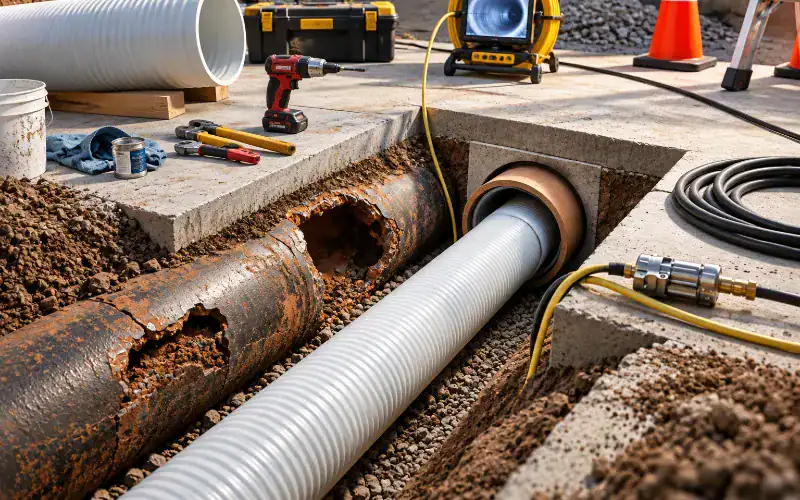
It requires extensive excavation. Traditional sewer line replacement often means digging a continuous trench the entire length of the damaged sewer line. This can mean tearing through landscaping, sidewalks, driveways, and even parts of a foundation slab.
It is time-consuming. Traditional excavation can take weeks to complete on complex lines, particularly when the sewer line runs under structures or mature trees. Weather, soil conditions, and permitting can add even more time.
It disrupts your property and daily life. Large-scale excavation can disrupt landscaping and driveways significantly, and open-cut trenching often incurs high surface disruption and restoration costs. Once the repair itself is done, you are often left with a second project: restoring your yard, replacing concrete, or repairing hardscaping.
It raises environmental concerns. Traditional methods often disrupt local ecosystems and habitats, and extensive excavation can lead to soil erosion and runoff, especially on properties with slopes or established gardens. For homeowners who care about their surrounding environment, this is a meaningful downside.
It tends to cost more in the long run. While the initial labor costs of trenching can sometimes look lower on paper, traditional excavation can lead to higher overall project costs due to restoration. Once you add up landscaping repair, concrete replacement, and cleanup, the true cost comparison often favors trenchless solutions.
The Pros of Trenchless Sewer Line Repair
This is where trenchless technology has changed the plumbing industry for the better, and it is a big part of why our team leans toward trenchless methods whenever a project allows for it.
Minimal disruption to your property. Trenchless repair uses small access points instead of a continuous trench, which means minimal surface disruption to your lawn, driveway, and landscaping. For busy families or anyone who has spent years on their yard, this alone makes trenchless sewer line repair worth considering.
Faster completion times. Trenchless repairs typically complete in 1-2 days, compared to the weeks that traditional sewer line repair can require. That means less time without full use of your plumbing, and less time with a crew and equipment on your property.
Cost-effective over the life of the project. While trenchless methods can involve a higher price tag upfront, trenchless methods can offer lower total project costs despite higher initial investments. When you factor in restoration savings, trenchless methods can be 30-50% less expensive overall compared to traditional repair once landscaping, concrete, and cleanup costs are included.
Built to last. Trenchless CIPP systems are designed for 50-plus years of service, and trenchless epoxy linings extend pipe life significantly. In fact, trenchless methods can last a minimum of 50 years with proper maintenance, which rivals or beats what many traditional pipe replacements can offer.
Better for the environment. Trenchless methods cause less soil disturbance than traditional excavation, which means fewer disruptions to your surrounding soil, your trees, and your local ecosystems. Trenchless repair also minimizes noise and pollution during the project, which your neighbors will appreciate too.
Ideal for urban and hard-to-access areas. Trenchless methods are favored in busy urban corridors to avoid road disruption, and they are also a great fit for backyards packed with landscaping, driveways poured over the sewer line, or homes where a full excavation simply is not practical.
The Cons of Trenchless Sewer Repair
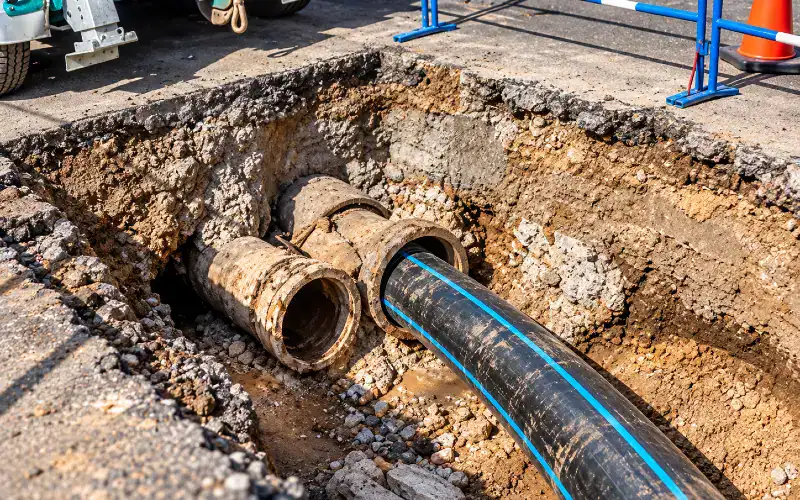
Trenchless sewer repair is not perfect for every situation, and an honest plumber will tell you that.
It requires specialized equipment and training. Not every plumbing company has invested in the specialized equipment and trained technicians needed to perform trenchless pipe repair correctly. This is one reason it pays to work with a team that has real experience with trenchless projects, like ours.
It is not always suitable for severely damaged pipes. If a sewer line has fully collapsed, is crushed, or has shifted dramatically out of alignment, trenchless techniques like pipe lining may not be enough. In some of these cases, sections of the line may still need a more traditional repair approach.
Soil and site conditions matter. Soil conditions significantly affect the choice between trenching and trenchless methods. Certain ground types, extremely old pipe materials, or unusual pipe configurations may limit which trenchless methods can be used.
Upfront cost can look higher. On the surface, trenchless repair costs starting around $6,000 and going up to $15,000 can look steep compared to a small, simple trenching job. Traditional sewer replacement costs typically range from $4,000 to $20,000, so the ranges do overlap, but the sticker price on a trenchless quote can catch homeowners off guard before they understand the full cost comparison.
Trenching vs Trenchless: A Direct Cost and Time Comparison
When homeowners ask us for a straightforward trenching vs trenchless breakdown, we usually point to three factors: cost, time, and disruption.
On cost, traditional sewer line replacement generally runs $4,000 to $20,000, largely depending on the length of the sewer line, depth, and the amount of restoration needed afterward. Trenchless repair costs generally start around $6,000 and can reach $15,000, but trenchless repair often avoids extensive landscaping restoration costs that add up quickly with traditional excavation. When all is said and done, many homeowners find that trenchless methods can save 30-50% on overall costs once restoration is factored in.
On time, traditional excavation methods can take anywhere from several days to multiple weeks depending on the complexity of the sewer system and the length of the existing line. Trenchless repairs typically complete in 1-2 days, which is a massive difference if you are trying to get your household back to normal.
On disruption, this is really no contest. Traditional excavation requires digging a continuous trench, while trenchless methods use small access points. If preserving your yard, your driveway, or your peace of mind during the project matters to you, trenchless solutions almost always come out ahead.
When a Hybrid Approach Makes Sense
Not every project fits neatly into one category. A hybrid approach often combines trenching and trenchless methods depending on site conditions, and our team is upfront about this when it applies to your home. For example, we might use trenchless pipe lining for the majority of a damaged sewer line, while opening a small trench only at a section with severely damaged pipes or a collapsed joint. This gives you the benefits of trenchless technology, like minimal disruption and fewer restoration costs, while still addressing problem areas that trenchless methods alone cannot fully resolve.
Trenching is preferred for shallow installations in undeveloped areas, so if part of your project involves an open lot with no landscaping to protect, a simple trench may genuinely be the faster and more cost-effective route for that section. Both trenching and trenchless techniques require thorough planning and permitting, and part of our job is guiding you through that process so there are no surprises.
How We Decide What Is Right for Your Home
When our team evaluates a damaged sewer line or a suspected slab leak, we do not default to one method. We look at the age and material of the existing pipe, the depth of the line, soil conditions, the extent of the damage, and your budget and timeline. Minor cracks or minor misalignment in an otherwise sound pipe are often perfect candidates for trenchless pipe lining or epoxy coating. A severely damaged, collapsed, or badly misaligned original pipe may call for a more traditional repair or a hybrid solution.
We also factor in your goals. If you are planning to sell your home soon and cannot afford weeks of landscaping repair, trenchless sewer repair work is usually the better fit. If you are dealing with an undeveloped lot and a shallow, easy-to-access line, traditional repair might get the job done just as effectively for less money.
Why Homeowners Trust LeakChasers for Sewer and Slab Leak Repair
At LeakChasers, we have built our reputation on getting the diagnosis right the first time. Before we ever recommend trenching or trenchless sewer line repair, we use advanced leak detection to pinpoint exactly where a sewer line or slab leak originates. That precision means we are not guessing, and it means you are not paying for unnecessary digging or unnecessary trenchless work.
Our licensed and insured plumbers are trained on both traditional repair methods and the latest trenchless technology, so we are never limited to a single tool for every job. Whether your home needs trenchless water line replacement, sewer line repairs through pipe bursting, or a more traditional approach for a badly damaged section of pipe, our team has the experience and the specialized equipment to do it right.
We also understand that a sewer line issue rarely feels convenient. That is why we offer prompt scheduling, clear explanations of your options, and honest pricing before any work begins. If you are dealing with hot water heater issues tied to a leak, slow drains, soggy patches in your yard, or you are actively searching for OKC slab leak repair, our team is ready to help you figure out the smartest path forward.
Trenching vs Trenchless Comes Down to Your Situation

There is no universal winner in the trenching vs trenchless debate. Traditional excavation still has its place for shallow, simple, or severely damaged lines, while trenchless solutions offer multiple benefits for homeowners who want minimal disruption, faster timelines, and long-term durability. In many cases, the best answer is a thoughtful combination of both, tailored to your property, your existing line, and your budget.
What matters most is working with a team that will give you an honest recommendation instead of pushing one method because it is easier for them. At LeakChasers, we walk every homeowner through their options, explain the real pros and cons for their specific pipe and property, and handle the repair with the same care we would want for our own home.
If you suspect a sewer line issue, a slab leak, or aging infrastructure under your property, do not wait for a minor problem to become a major one. Reach out to LeakChasers today, and let our experienced team help you decide whether trenching, trenchless repair, or a hybrid approach is the right fit for you.